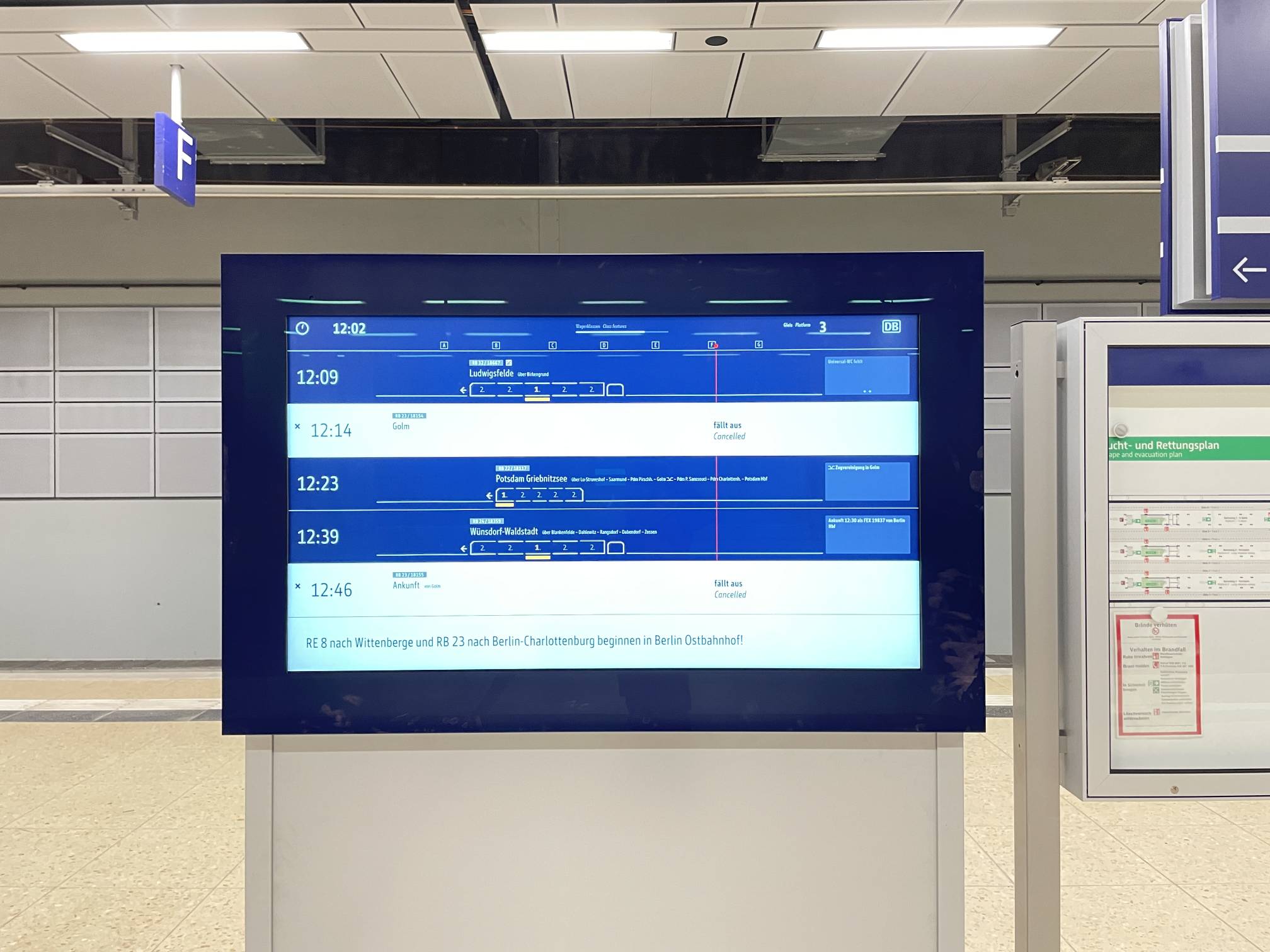
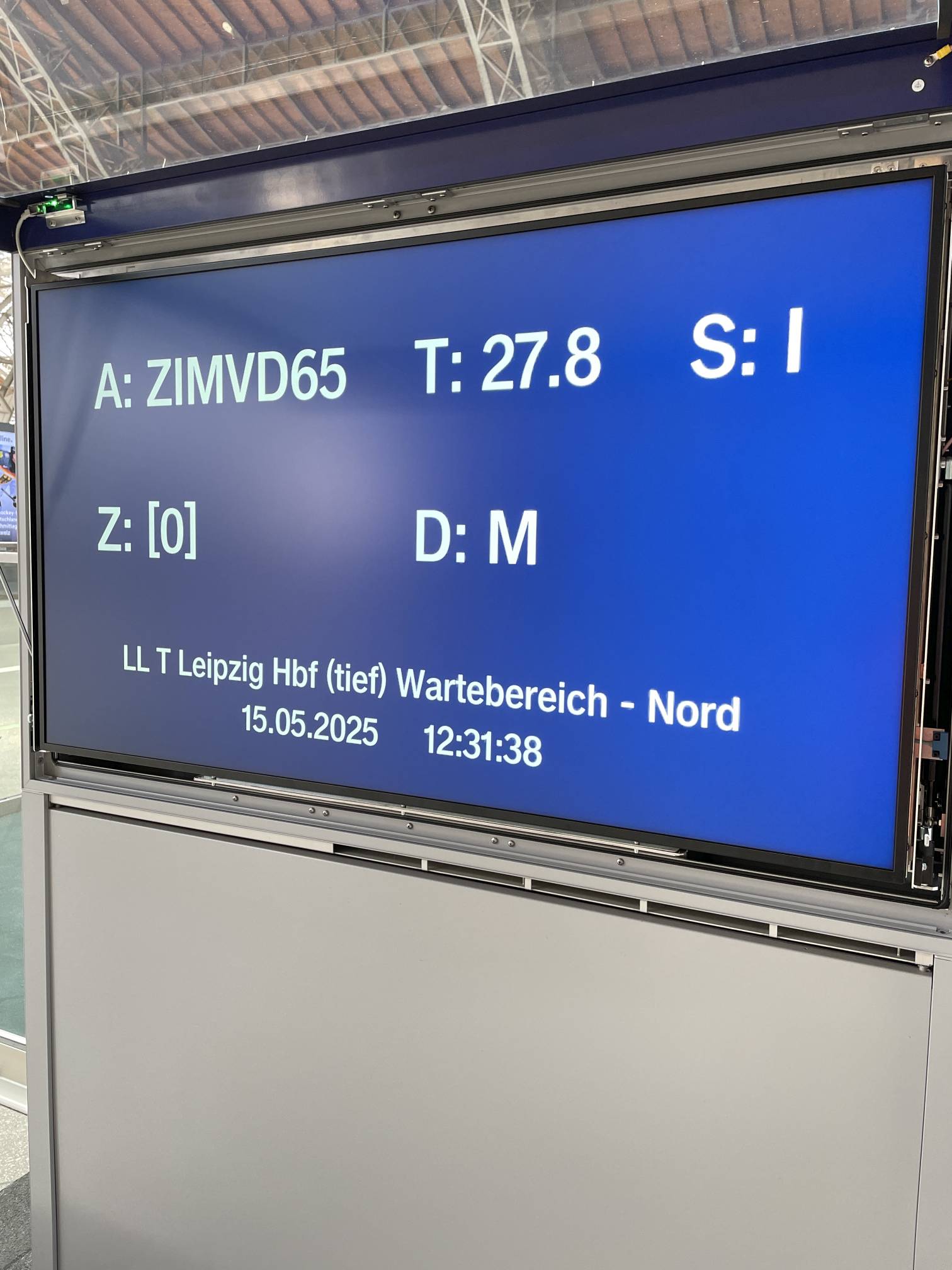
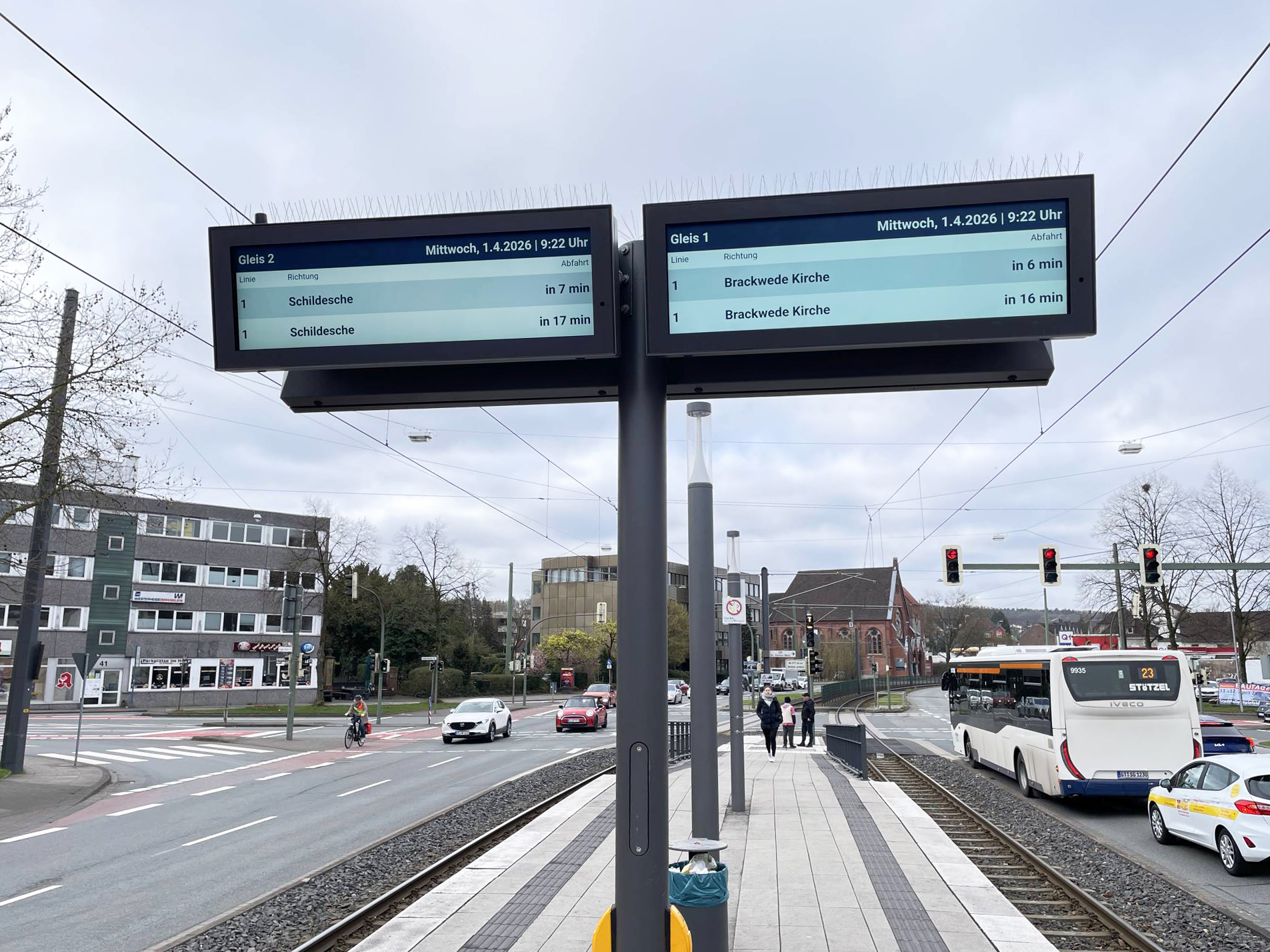
Service for passenger information systems is more than troubleshooting. Service is knowledge. Service is trust. That’s why it’s so important to us that our service teams truly understand the passenger information systems they are meant to maintain and repair. Being able to operate them “only” superficially is not enough.
The challenge: Complex requirements in service operations
For railway operators, transport companies, and municipalities, every deployment location is different. No two installations are alike. Nevertheless, our passenger information displays must always function reliably:
- in direct sunlight on the platform
- in poorly lit underpasses
- in conjunction with older systems and the latest technology
- with minimal downtime, because every minute counts for passenger satisfaction
Without a deep understanding of the system architecture, functionality, and technical specifics, there is a risk of longer response times, uncertain diagnoses, and multiple deployments for the same problem.
Our approach: Practical training directly on the device
To avoid this, we provide structured training. Our goal is to:
- build system understanding: Teams learn the structure and innovations directly on the devices. Those who understand how a system is built diagnose faster.
- highlight technical specifics: What are the functionalities and display variants? What demands do they place on installation and operation? We answer these questions practically with real-world examples from the field.
- enable exchange: Open dialogue is paramount to us. Our technicians bring their challenges, ask questions about legacy systems, configuration procedures, and service and diagnostic options. Better solutions emerge precisely where product expertise and field expertise meet.
Why continuous knowledge transfer has a measurable impact
What begins in two days of training continues daily in service. When our technicians understand the systems, we and our customers benefit from:
- faster problem solving: Less time for diagnosis, quicker return to normal operation.
- higher service quality: Correct assessment of problems on the first deployment.
- better feedback: Insights from service teams in the field flow back into product development.
- trust: Customers prefer to work with partners who understand their devices.
Last but not least, this means more reliable real-time information for passengers with fewer system failures.
Conclusion: Service is more than repair
Two days of training may sound small, but when conducted regularly, they are a big step towards true Service Excellence. They create the foundation for our customers – and thus your passengers – to rely on the systems.
Our thanks go to all service employees for their regular, dedicated participation in the training sessions and the open, professional exchange.
Do you have service questions about your passenger information systems?
Whether it’s about installation, maintenance, diagnosis, or service support – we are happy to help. Contact us if you would like to learn more about our service training or support options.