Anyone operating a passenger information system today knows the picture: a signal box reports a change, the operations control system knows about it, the station display still shows the old status, and the app has a third version. The number of systems, data sources and interfaces keeps growing, while passengers rightly expect all channels to show the same information. What’s missing is a reliable backbone that turns different data sources into consistent information objects and delivers them precisely where they’re needed. That’s exactly what the Funkwerk Mobility Platform does. It combines data integration, operational logic and delivery – turning connected systems into a robust operation.
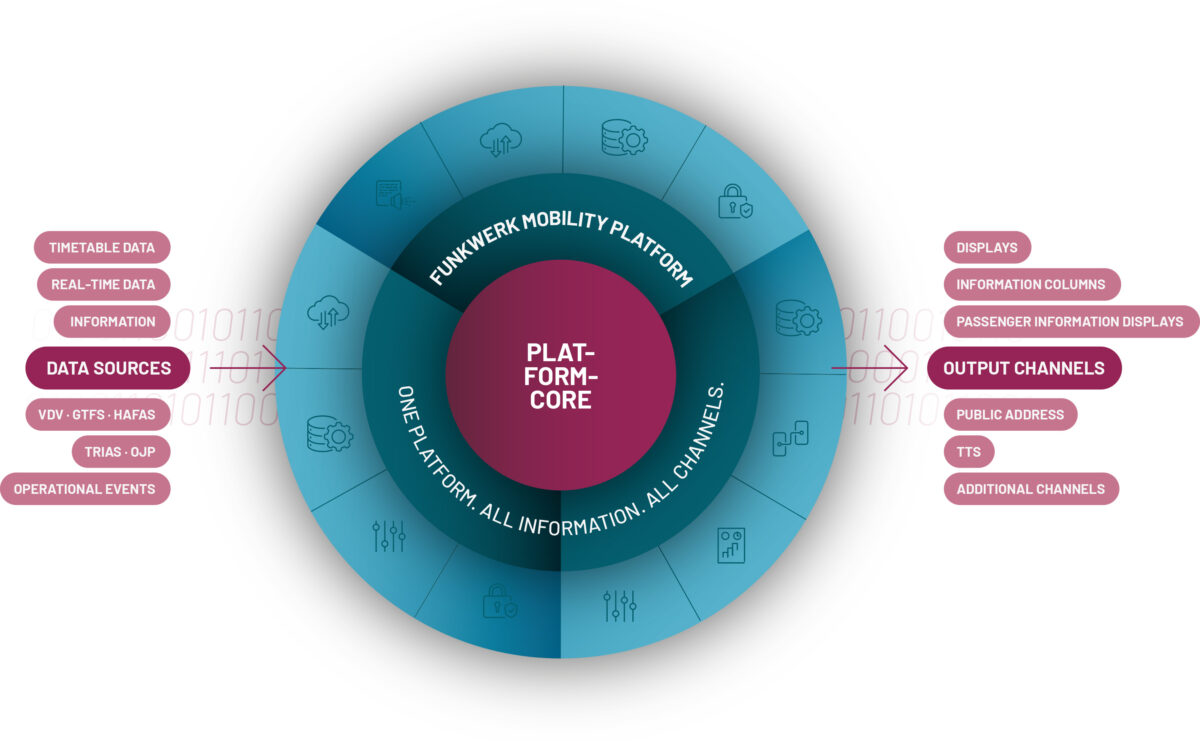
Review: From legacy system to the Funkwerk Mobility Platform
We’re increasingly seeing with our existing system that we can no longer fully cover new use cases. Interfaces are becoming more complex, maintenance costs are rising, and customizations tie up more capacity than they add to operations. That’s why we decided to develop a new system in parallel.
The Funkwerk Mobility Platform was created and presents itself today – while we continuously develop the system further – as a multi-tenant, standardized product platform with open interfaces, reusable building blocks, and clearly defined roles and workflows. It is aimed at railway companies, public transport operators, metro systems, and other mobility infrastructures. For operators, this means: new locations and functions are no longer developed as individual projects, but configured on a familiar basis. Whether this results in shorter rollout times in your project depends on your specific starting point. We’d be happy to look at this in detail for your system.
Get in touch with us now!
From data import to display
Data processing within the Funkwerk Mobility Platform follows an end-to-end chain. Timetable, real-time and operational data are integrated via established standards such as HAFAS, GTFS, TRIAS Stop Event, and VDV 453 or SIRI SM. The platform also imports notifications, incidents and data from external applications – such as Terminalis – with ease. For you as an operator, these standards are the key point, because they ensure vendor independence and guarantee flexibility. You decide which data is relevant for your system.
The platform then selects the data for each use case – for example by station, platform/track or individual device – and prepares it by filtering, sorting, grouping and transforming. Layouts are built from widgets, conditions, versions and assets. Output is delivered to TFT displays, LED signs, e-kiosks, via public address systems, or through text-to-speech.
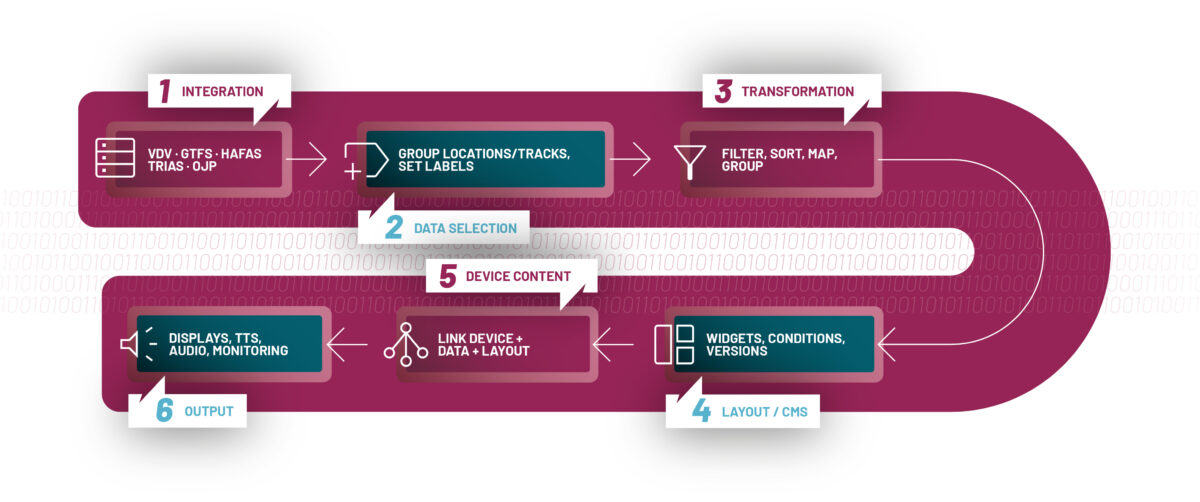
Practical example: platform/track change: A platform/track change is recorded in the operations control system. The platform updates the affected station displays, the loudspeaker announcement and the passenger information consistently, without any manual updates needed on the platform. This is exactly what “Intelligent Backbone” means: one change, one consistent view across all channels.
Security and operations
The platform offers a modern, role-based authorization and authentication model. Customers can seamlessly integrate their existing single sign-on (SSO) solution. Backup and recovery strategies are an integral part of quality assurance. Operations are GDPR-compliant, and certifications to ISO 27001 and ISO 9001 are in place.
Outlook: AI for tomorrow’s mobility
The Mobility Platform has always followed the approach of providing data and functions via standardized interfaces. Integrating AI applications—for example via the Model Context Protocol (MCP)—is therefore the logical next step: in future, existing platform functions will be usable not only for classic applications, but also for AI agents. At InnoTrans 2026, we presented two concrete applications (more features are already in the pipeline):
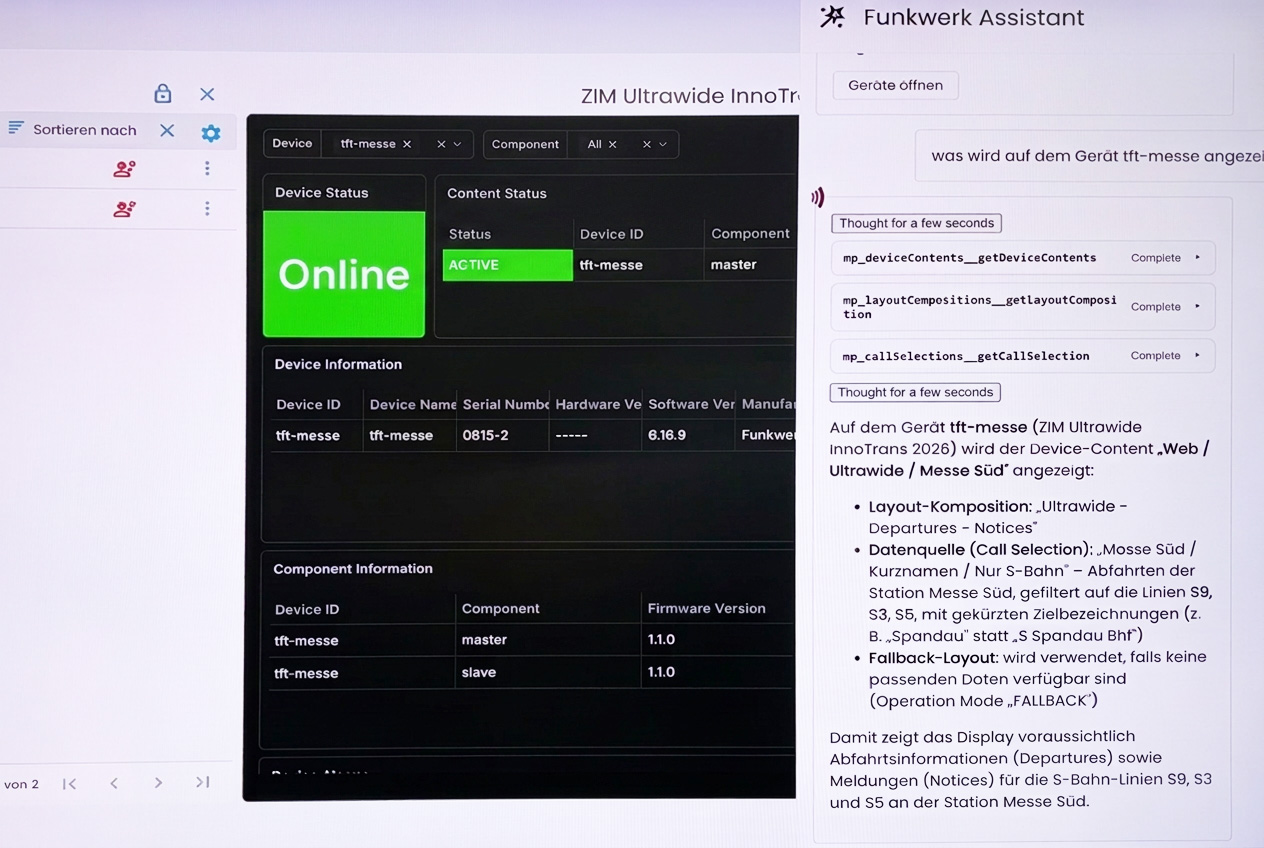
Funkwerk Assistant: The assistant connects the Funkwerk Mobility Platform with AI. It knows the platform manual and system documentation, knows which devices are connected to the platform, and supports users directly in day-to-day operation. It can also carry out actions within the relevant permissions—for example creating notifications or assigning layouts to displays.
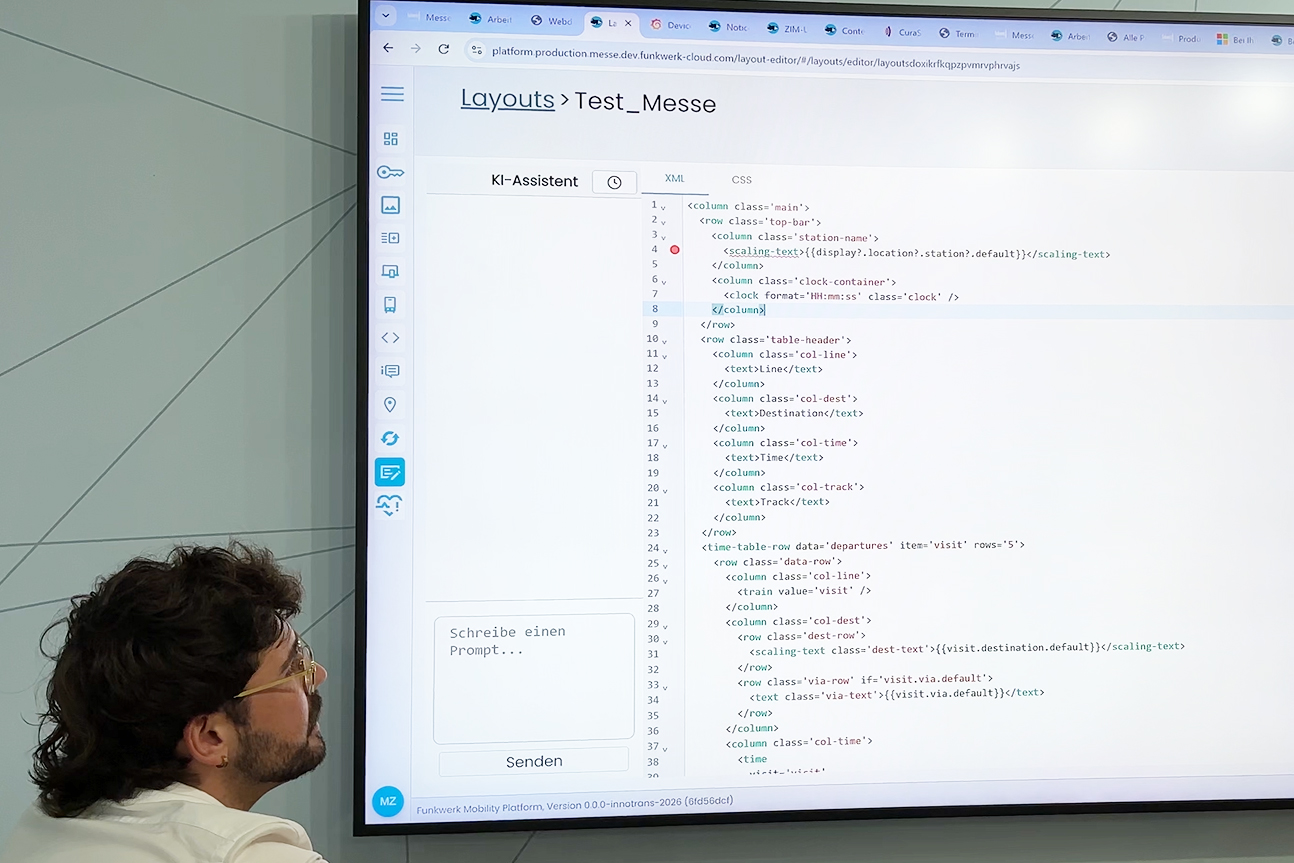
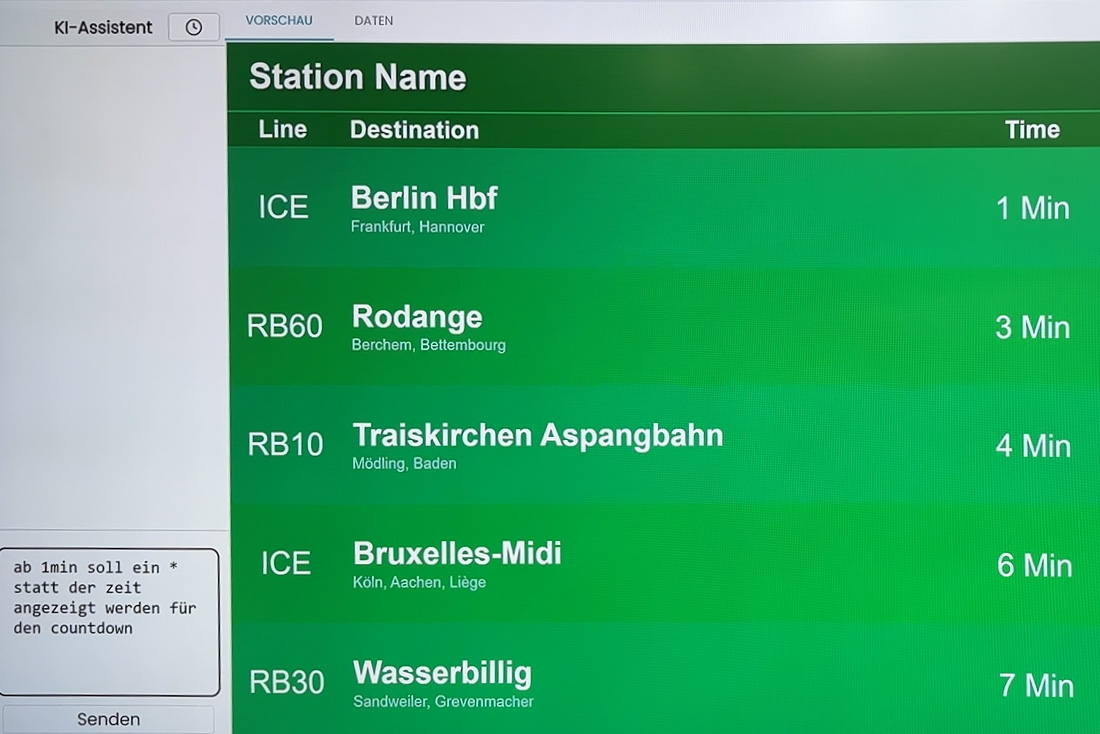
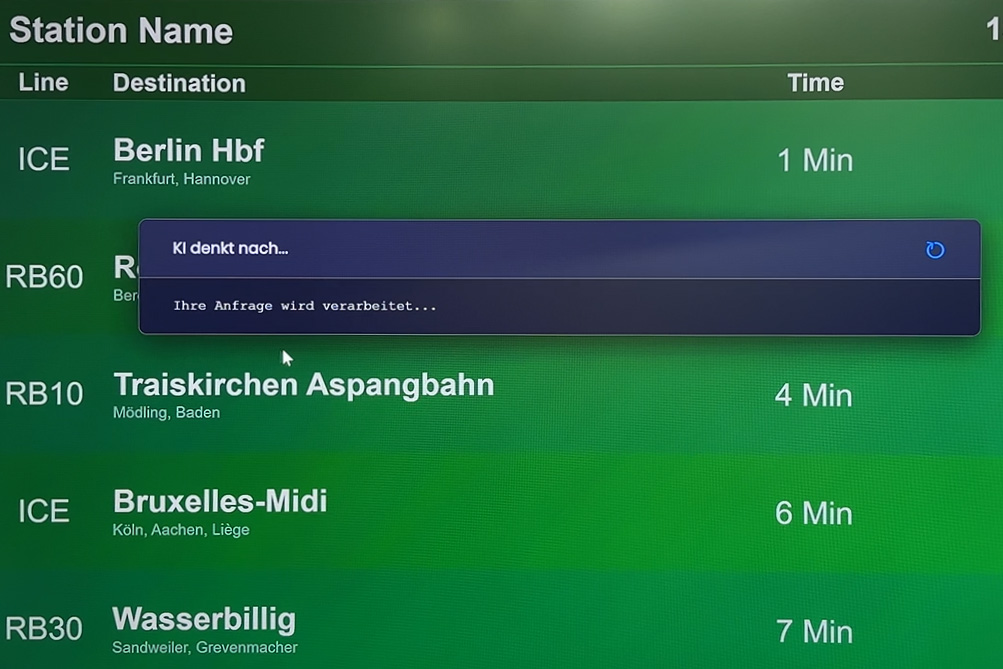
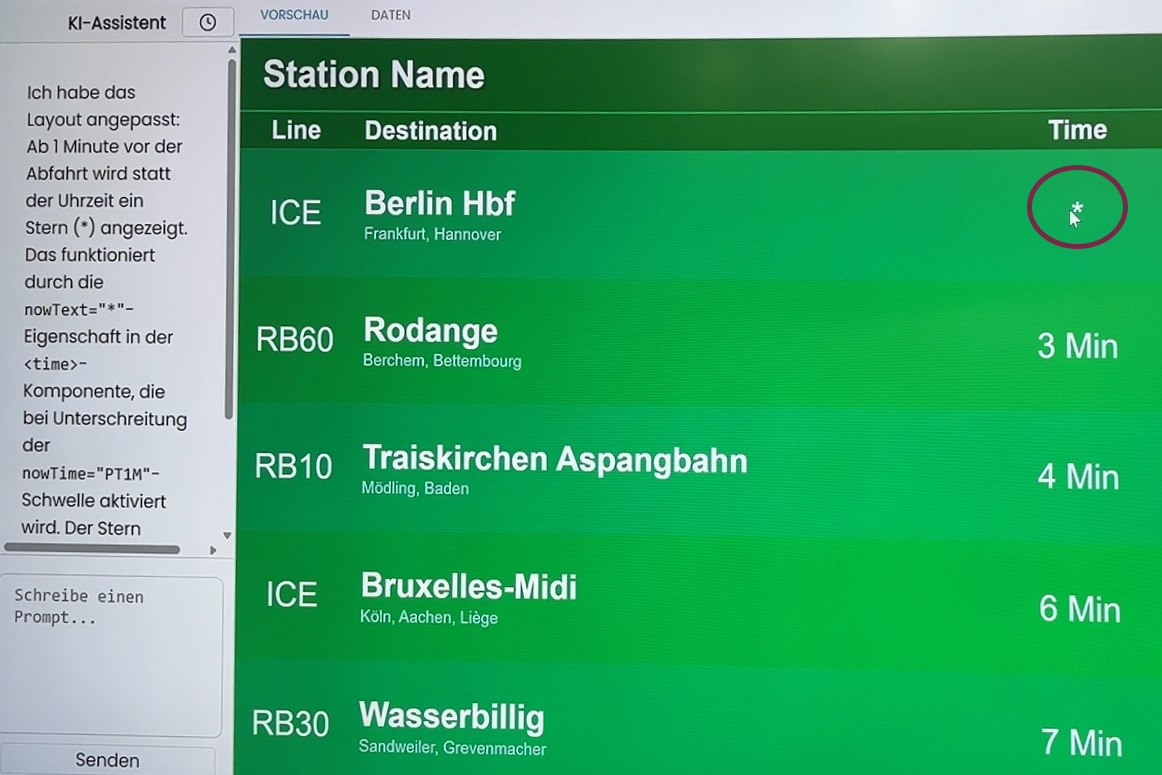
AI layout editor: As an extension of the text-based layout editor, it uses just a few prompts to generate a layout based on customer requirements, which is then finalized in text mode. This reduces layout creation to just minutes.
Conclusion: Book an appointment
The challenge in passenger information operations is rarely a single piece of technology, but the interaction of many systems. A standardized platform with open interfaces brings order here: fewer isolated solutions, consistent information across all channels, and more room for new requirements.
Talk to us about your passenger information system. Together, we’ll analyze which data sources and output channels interact in your setup and which steps are realistic. Book an APPOINTMENT now.
« all news


